One March day in 1962, the young Russian poet, Yevgeny Yevtushenko, received an unexpected phone call. Dmitri Shostakovich was on the line asking if he had permission to set one of Yevtushenko’s poems to music. The poem, “Babi Yar” // «Бабий Яр», which had been published in 1961, denounces the massacre by the Nazis in 1941 of 34,000 Jews in a ravine near the Ukrainian capital, Kyiv. It condemned not only Nazi atrocities, but also the Soviet Union’s state-sanctioned anti-Semitism. Officials responded by launching a vicious campaign against the poet and banning readings or new publications of his work. So Yevtushenko was delighted by the famous composer’s moral and artistic support.
The poem had been shown to Shostakovich by his closest friend, Isaak Glikman and inspired him to compose his magnificent choral Symphony No. 13 in B flat minor, Op. 113. The Symphony features four other poems by Yevtushenko which criticised various aspects of Soviet life, which Shostakovich also decided to set to music: “Humour” // «Юмор»; “In the Store” // «В магазине»; “Fears” // « Страхи»; and “A Career” // « Карьера». The composer regarded Symphony No.13 as his masterpiece and of all his compositions it was his favourite. The Symphony had its premiere in Moscow on 18 December 1962 and was received with rapturous applause. The authorities then banned it from being performed for the next two years.
Benjamin Goodman will talk to us about the genesis of Yevtushenko’s poem and Shostakovich’s choral Symphony and the censorship problems both poet and composer experienced with the Soviet authorities as a result. He will describe Shostakovich’s ‘word painting’ technique and the ways in which he conveys Yevtushenko’s verse in music to create a sombre and chilling but ultimately consoling choral Symphony. Benjamin will illustrate his talk with the playing of recorded extracts from the Symphony and with reference to the text of the five Yevtushenko poems which Shostakovich set to music (which will be shown on screen in Russian and English translation).
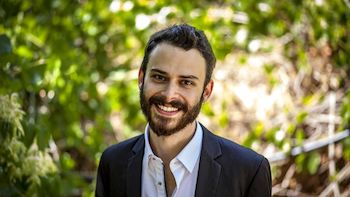
Benjamin Goodman is an outstanding pianist who has performed and given master-classes throughout the world and has been awarded top prizes in international piano competitions. He was born in Oxford, and began playing piano and violin from the age of five. After emigrating to Israel at the age of 13, he focused his studies solely on the piano, studying with Esther Narkis. He received a BMus and Mmus in piano performance, both with distinction, from the Jerusalem Academy of Music, studying with Professor Eitan Globerson. His studies have been supported by full scholarships from the Jerusalem Academy and, since 2008, from the America-Israel Cultural Foundation. In 2017 he graduated with honours from Mannes College of Music, New York City, where he was also awarded a Post-Graduate Diploma in piano performance.
In 2020, Benjamin began his doctoral studies at the Royal College of Music, London, and has been annually awarded an RCM Studentship Scholarship to fund his research on intercultural fusion in the piano music of composers who emigrated to Israel from the Soviet Union. For each of the past four years he has been awarded a Visiting Research Fellowship at the Hebrew University in Jerusalem, and he works as an accompanist for the Faculty of the Performing Arts at the Jerusalem Academy of Music and Dance.